
 A Canadian Company
Watts Law |
|
WATT'S LAW is a means of calculating the amount of work an electrical appliance is doing. It can be a light bulb, an electric motor or a speaker. The most common item on a automobile measured in Watts is in fact the light bulbs. Bulbs are not sold or ordered by the amount of Amps they use. It is generally the Watts |
|
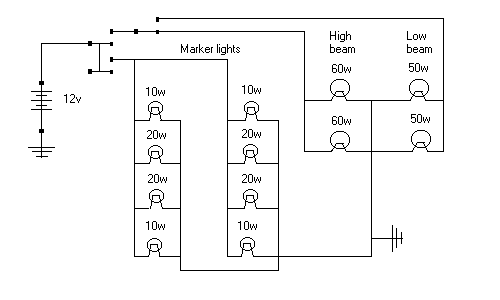
Now combining what we know about, Series/Parallel circuits, circuit rules and then using WATTS LAW we can work out the Amperage draw on a circuit with marker/sidelights and headlights. Calculating the sizes of fuse required. |
 |
|
This diagram is a Parallel circuit and each branch is a Parallel circuit. So using Ohms Law the quick way is to add the Watts in each branch and divide by 12 Volts that will show the Amperage in each branch. (Check by figuring the Amp's on each bulb, then use KIRCHOFF'S LAW to do the calculation.)
|