A Canadian Company
Ohms Law |
|
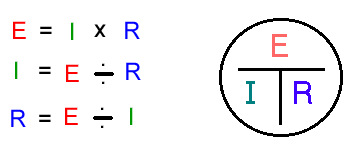
OHMS LAW makes it possible to predict the outcome of an electrical cicuit using the measurements of VOLTS (E), AMPS (I) and OHMS (R) and because of this it enables you to find a problem in a circuit by checking the values produced in the cicuit, and comparing them to to the values you should expect. By becoming comfortable and used to working with OHMS LAW It will help you get a good solid grounding and understanding of electrical problems. Mostly you will understand what the values and information you obtain from meters actually means. |
 |
|
To work out any calculation in OHMS LAW you need two values. The missing value is the one you can work out. For these calulations I will use resistors |
 |
|
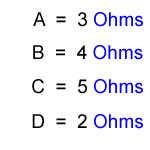
The answer is 3 Amps so we can use 3.5 Amp fuse, (fuses should be slightly higher than the draw). Now lets go a bit further, I want to place another resistor(A) in front of the main resistor(B). Resistor (A) has 3 Ohms. Resistor (B) has 4 Ohms. Again I need to know the size of fuse to run. This takes a bit more calculating, and remembering the rules about Series circuits. As this has now become a Series cicuit
|
|
|
|
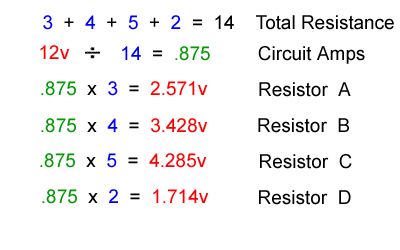
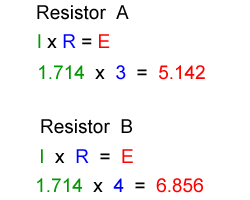
The answer is 1.714 Amps is the required amount of current, so a 2 Amp fuse would be fine. Notice as the Resistance went up the Amperage went down. Now we need to calulate the voltage drop across the resistors. When we used only one resistor the voltage drop was 12v across the circuit. With two resistors in series the voltage drop is split between the two. As they are different values the voltage drops will be different though each resistor. (If the resistors had the same value the voltage drop would be the same for both resistors). |
|
|
|
Now if we add the two totals together it will come to 11.998 Volts
The total drop is 11.998 Volts again this is an acceptable answer.
|
 to represent the load or resistance in the circuit. Lets assume we have just the one resistor it is 4 Ohms it's in a Automobile so the system is 12 Volts What size fuse do we require to protect the circuit?. All we need to figure out is the value of Amps required for the cicuit. Using OHMS LAW we can do the calculation.
 I know the circuit is 12 Volts and I have two resistance values of 3 Ohms and 4 Ohms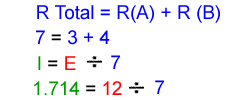
 The same method applies when calculating multiple resistors. Again a 12v series circuit,